Black Friday Marketing Strategy for a One-Person Shop
Black Friday marketing strategy for a one-person shop: a four-week plan to choose an offer, prepare emails and posts, and check the margin before launch.
By Holiday Promo Playbook by Cosmo Suite · Editorial policy
Published · 9 min read
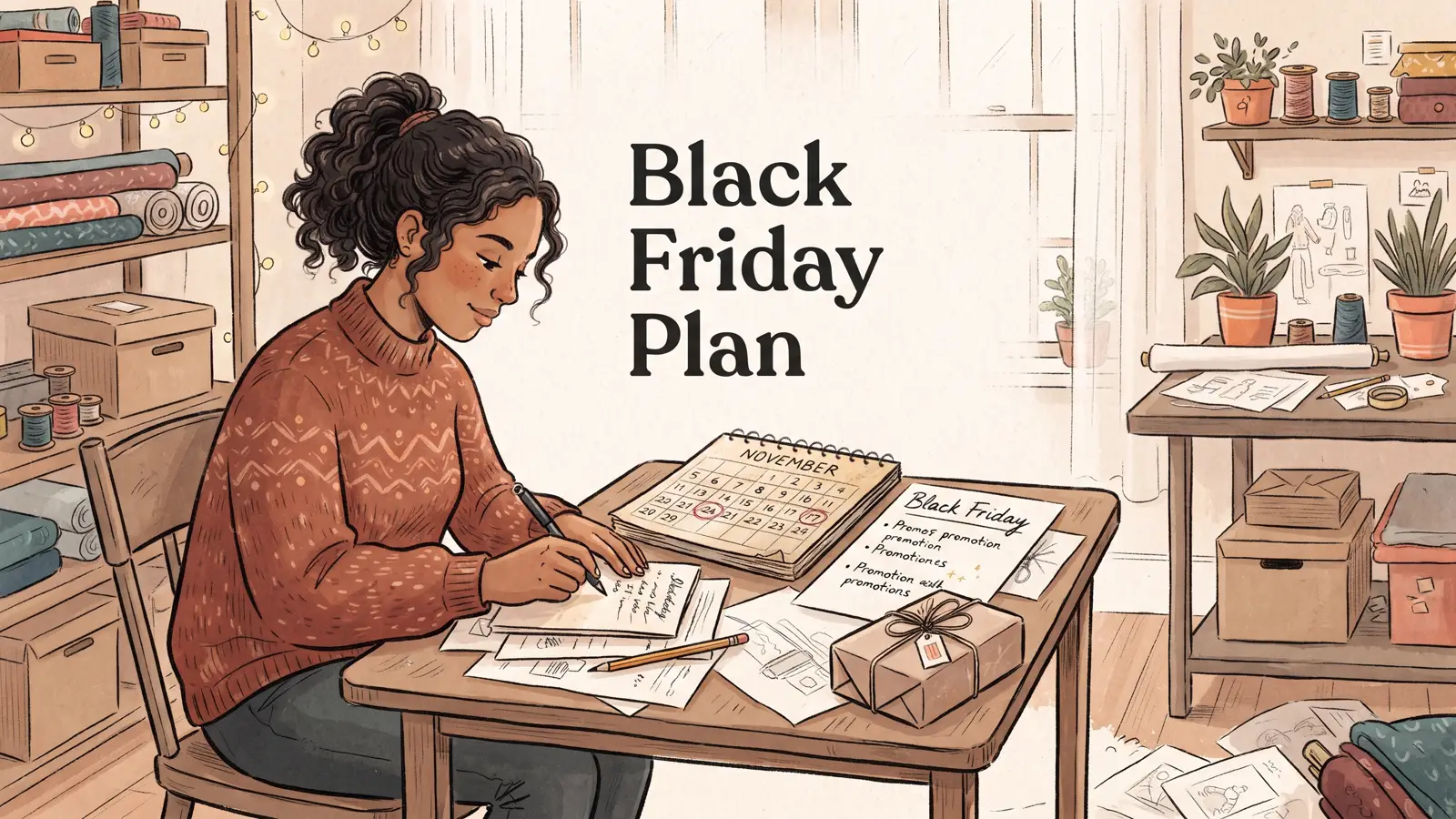
For a one-person shop, a useful Black Friday marketing strategy is a short plan you can finish while still making, packing, or serving customers. Pick one offer or full-price feature, prepare the messages in stages, then check the margin and fulfillment before you announce anything. Black Friday falls on November 27 in 2026, which leaves November to get the work ready.
You do not need a month of daily promotions. A gift guide, a bundle, or a clear product story can give people a reason to visit without a deep discount. The four-week plan below turns the work into one decision at a time. Use the dates as a working schedule and adjust them to your shop.
Key takeaways
- Choose an offer that fits your margin and what you can fulfill.
- Give each week one job: decide, draft, prepare, and publish.
- Send a reminder only when it adds useful information.
- A Black Friday campaign can feature products at full price.
What a Black Friday plan needs for one person
A manageable plan has four parts: a customer action, an offer or feature, the message that explains it, and a final check that the shop can deliver what it promises. Put each part in one place so you are not switching between notes, drafts, and last-minute decisions.
Start with the customer. Do you want someone to browse a gift guide, see a bundle, order by a genuine cutoff, or learn about a product? Choose one action. Then select the product or group of products that supports it. A holiday marketing calendar with plan-by dates can help you fit that Black Friday work beside the other dates you plan to cover.
Working back from Friday, November 27, set one job for each week. These are suggested work windows for 2026, not public deadlines. Move them to match your shop.
| Suggested dates | One job to finish |
|---|---|
| Nov 2-6 | Choose the offer or full-price feature and check margin and capacity. |
| Nov 9-13 | Draft the announcement email and first post. |
| Nov 16-20 | Prepare any launch and reminder messages; check terms and links. |
| Nov 23-25 | Review scheduled copy, products, prices, and links before the holiday weekend. |
Before you write copy, check three constraints:
| Check | Question to answer | What to record |
|---|---|---|
| Offer | What will the customer get, and what are the exact terms? | Items, price, start and end time, exclusions |
| Capacity | Can you make, pack, ship, and support the orders you are inviting? | Available quantity or a limit you can meet |
| Margin | What remains after the costs and fees for this offer? | Your own costs, fees, shipping support, and price |
These checks are specific to your shop. Do not borrow another seller's discount or shipping promise. If the numbers are unclear, simplify the offer or use a full-price feature while you work them out.
A holiday promotion kit with written emails, posts, and planning sheets can give you materials to edit. It cannot decide what your shop can fulfill or which offer leaves enough margin.
Week 1: choose the offer
Spend November 2-6 deciding what to promote. In 2026, Black Friday is Friday, November 27. The U.S. Office of Personnel Management lists Thanksgiving on Thursday, November 26, in its 2026 federal holiday schedule. Set your own campaign dates around when your customers shop and when you can deliver.
Write a one-sentence offer before opening a design tool: “From [start] to [end], customers can [specific action] and get [specific benefit].” If you cannot fill those blanks plainly, the offer still needs work. For a gift guide or product feature, replace “get” with what the guide helps them find.
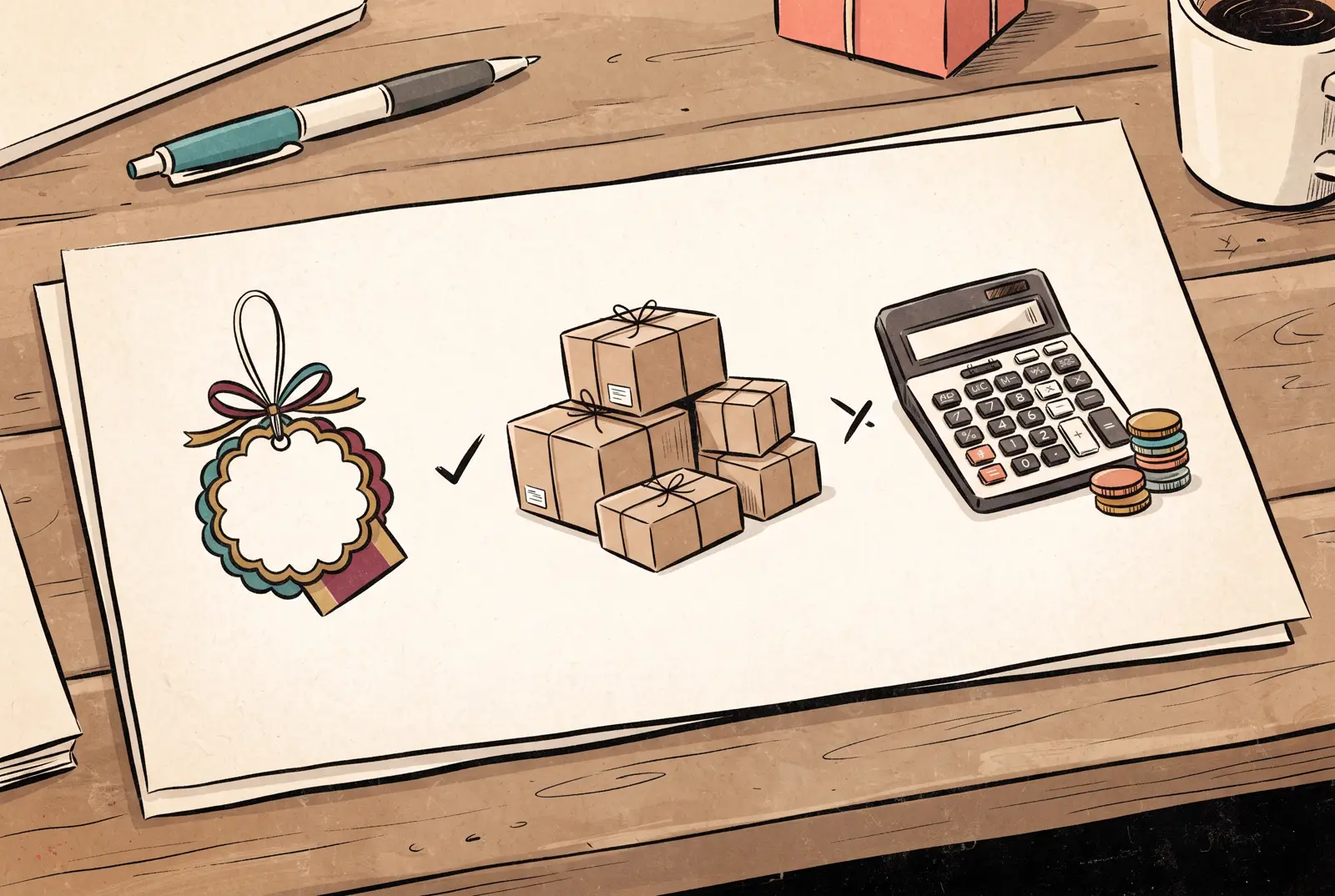
Then check whether the offer has a workable margin. A simple test is to list the full price, discount if any, product cost, transaction and marketplace fees, packaging, and any shipping amount you cover. Use your actual figures. If a percentage reduction leaves too little after those costs, change the offer rather than hoping more orders will fix it.
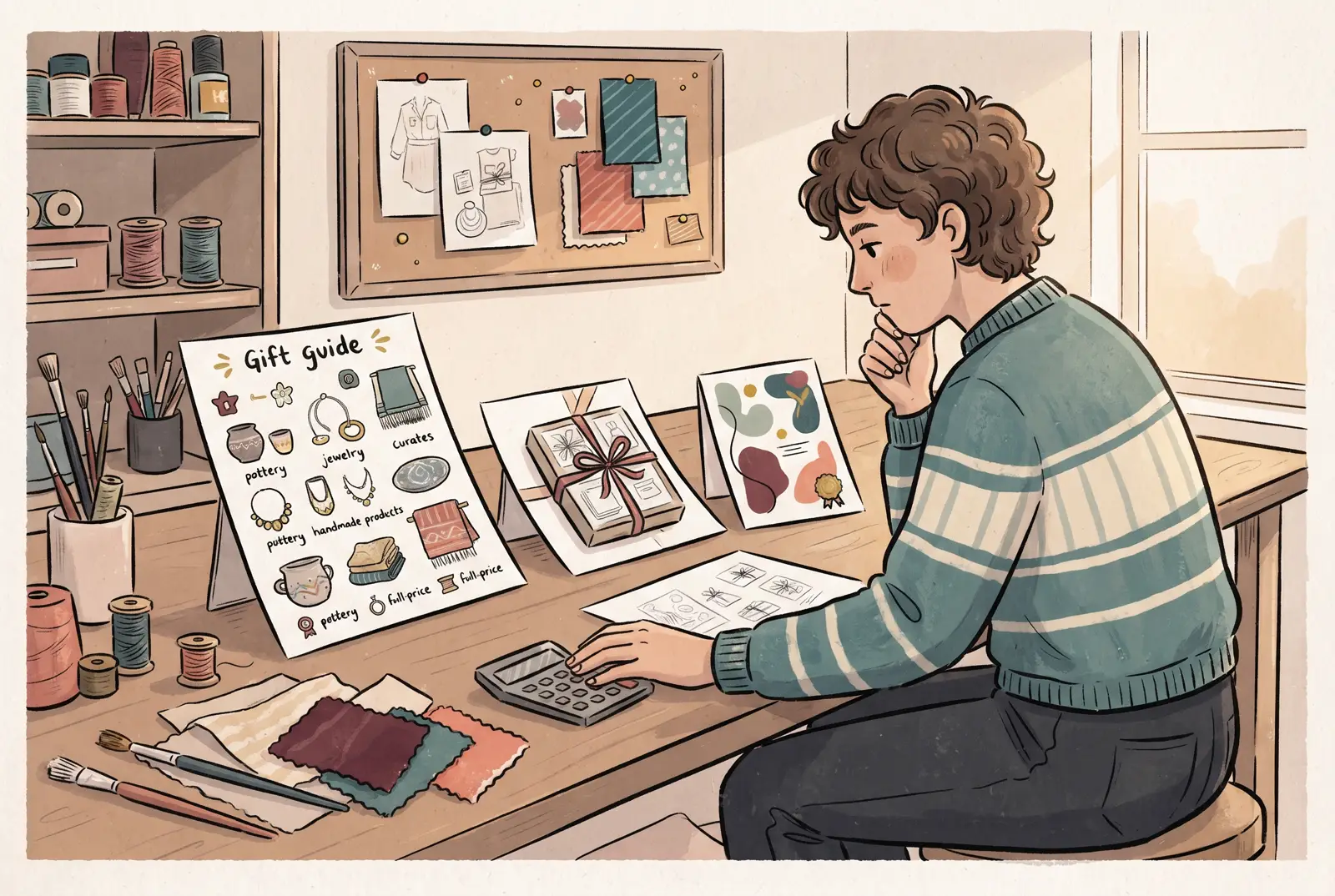
You can also choose a non-discount offer. A bundle still has a cost, and a gift still takes time or materials, so check both. Early access has fewer direct costs, but you need to be clear about who can use it and when it ends.
Week 2: tell your list what is coming
Turn to the first announcement during November 9-13. It can introduce the offer, explain who it suits, and state when it starts. If you are not discounting, say what customers can browse or learn instead of hinting at a markdown.
Draft the subject line and the email body together. The subject should match what the email actually contains. The Federal Trade Commission's CAN-SPAM guide for businesses explains requirements for commercial email, including accurate subject lines and a way for recipients to opt out. Check the current rules and your email provider's settings before sending.
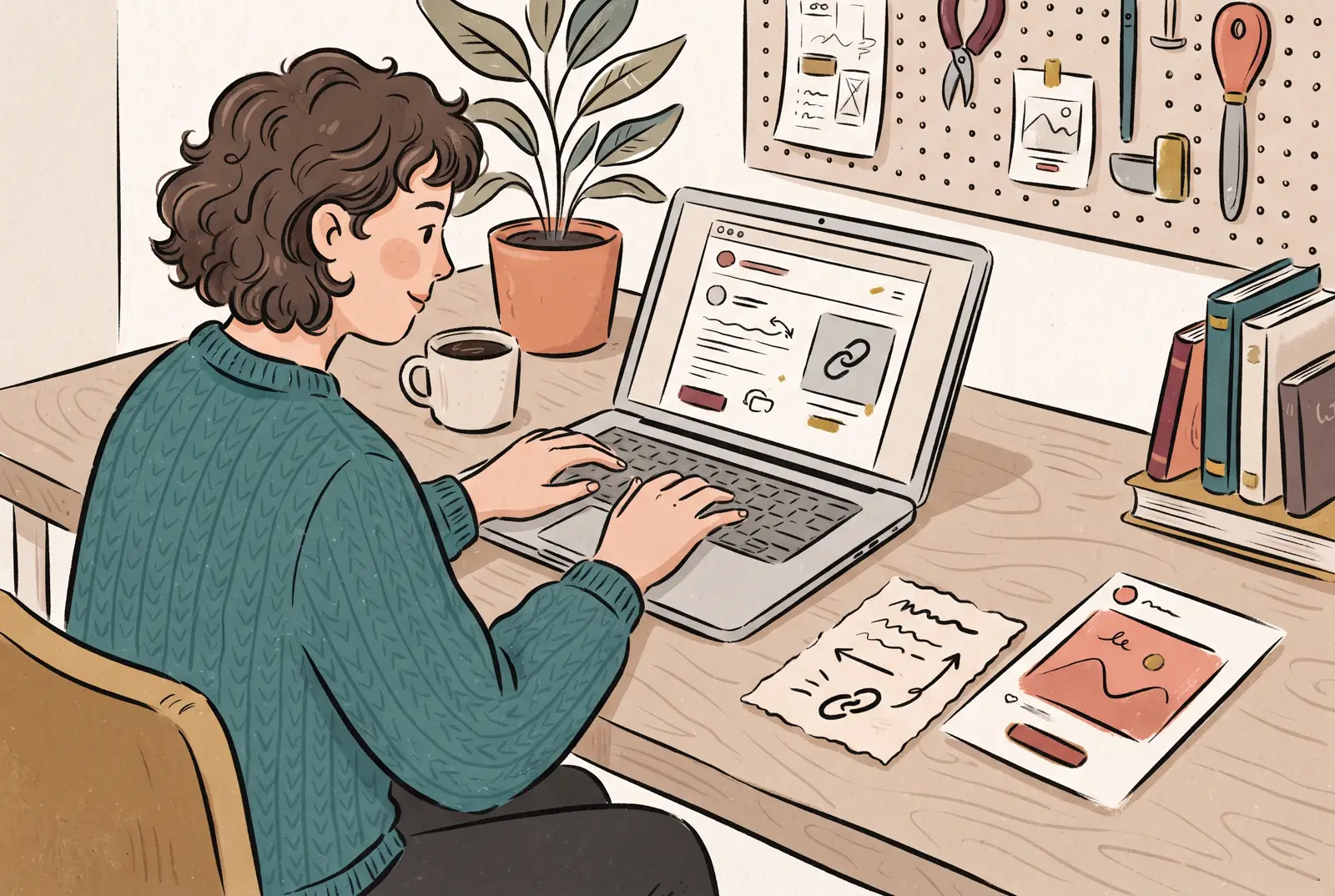
Keep the email focused. Name the product or gift category, tell readers what they can do, and include one link that works. Add any restrictions beside the offer, not in a note that is easy to miss. If the deadline is a shop decision rather than a delivery cutoff, label it as the end of the promotion.
Prepare a matching social post from the same facts. It does not need to repeat every sentence from the email. Use a product detail, the bundle contents, or a direct invitation to browse. Save a copy of the offer terms so every channel uses the same dates and conditions.
Week 3: write and schedule the messages
Finish the copy and choose which messages to send during November 16-20. For a small list and a small shop, one announcement and one reminder may be enough. Add another message only when it serves a different purpose, such as opening a new offer or sharing a real last-order date you have checked.
Make a short sequence:
- Announcement: explain the product or offer and when it begins.
- Launch: tell customers the offer is available and give them the link.
- Reminder: repeat the end time or answer a question customers may have raised.
- Close: confirm the promotion has ended or return to regular product messaging.
Treat this as a menu, not a requirement to send four emails. If two messages would say the same thing, keep the clearer one. Do not add a countdown to create pressure unless a real end time exists. Avoid a fake “last chance” when you expect to continue the same offer after the stated deadline.
Schedule the posts and emails only after checking the date, time zone, audience, link, and offer terms. Leave the final review for the week of the event, because a product can sell out or a shop can need to change its plans.
Week 4: prepare posts and the final check
Reserve November 23-25 to get the campaign ready before Thanksgiving and Black Friday. Put the email, post, offer terms, and link in one working document. Keep a separate operational note for inventory, packing, and customer support. Marketing copy should not promise a quantity or delivery date that the operations plan cannot support.
Review every message on a phone. Check that the product is easy to identify, the link opens, the price and dates match, and any discount code works. Read the subject line by itself and ask whether it describes the email fairly. Confirm that the end time is stated in the time zone your customers will understand.
If you sell on a marketplace, check its current event requirements directly before mentioning them. Do not copy a promotion rule from another seller's post. If you ship physical products, check the carrier's current page for each service and destination before you publish a delivery cutoff.
If something fails the check, remove that claim or pause the message. A simpler campaign is easier to correct than several versions of a promise you cannot keep.
During the sale: send only what helps
On Black Friday, publish the message you prepared and keep an eye on customer questions. If people ask what is included, clarify the product details. If a code or link does not work, correct it promptly and update the channels where you shared it.
A reminder can help customers who missed the launch, but it should say something accurate. You might point out when the offer ends, explain a bundle, or link to a gift guide. If there is no new information and no genuine deadline, another send may add noise without helping someone decide.
Keep the price and promotion terms consistent across your email, site, and social posts. If you need to change them, update the places customers are likely to see and save a note of what changed. Do not keep advertising an offer that has ended or a product you cannot supply.
After Black Friday: close the loop
After the promotion, remove or update scheduled messages that refer to the offer. Thank customers who bought, answer open questions, and return your channels to the next useful topic. If you plan to continue into Cyber Monday, state what is different and how long that separate offer lasts.
Write down what you want to remember while the details are fresh: which message took the most work, which question came up, whether the offer was manageable, and what you would change next time. Use records from your own shop. Avoid drawing a broad conclusion from a single weekend or a small number of orders.
A short note also helps you decide whether next year's plan should start with the same products, a different offer, or no sale at all. Keep the parts that worked for your workload and drop the ones that created busywork.
If you do not want to discount
You can take part in the shopping weekend without reducing every price. Feature a gift guide, a bundle, early access for subscribers, or a product story that helps someone choose. Each option still needs clear terms: list the items in the bundle, explain who gets early access, and describe any gift while supplies last only if the supply is real.
If you would rather skip the event, use the time to prepare a useful December message. Customers may need a gift idea, an accurate last-order date, or a note about when your shop will reopen. A calendar gives you more choices than a blanket sale.
Before you choose, ask whether the promotion is worth the work it adds. If a discount would put pressure on your margin or production capacity, a full-price feature may fit better. The Profit, Fees and Discount Calculator in Holiday Promo Playbook gives you a worksheet for recording the costs behind an offer.
How Holiday Promo Playbook fits
Holiday Promo Playbook is for small shops that need to plan a promotion and prepare the copy around it. Its Black Friday and Cyber Monday pack includes written emails, SMS texts, Canva posts, and a launch checklist. The kit also lists an E-commerce Deals Planner and a Profit, Fees and Discount Calculator.
You still choose whether to discount, check your own costs, and edit the messages to match your products and customer terms. The kit does not send emails or publish posts for you. If you need dates, copy, and a margin worksheet together, Holiday Promo Playbook collects those materials in one download.
Why trust this article
Holiday Promo Playbook by Cosmo Suite publishes planning guidance for small shops. We checked the 2026 Thanksgiving date against the U.S. Office of Personnel Management schedule and checked email guidance against the Federal Trade Commission's CAN-SPAM guide on November 1, 2026. The week-by-week dates are an editorial workflow, not a sales forecast or delivery promise. See who makes Holiday Promo Playbook and the site's editorial policy.
Frequently asked questions
When should a small shop start planning for Black Friday?
Start as soon as you decide to take part. In 2026, Black Friday is November 27, so a one-person shop can use the first week of November to choose an offer, then prepare and check each message in stages.
Does a small shop need a Black Friday discount?
No. A gift guide, bundle, early access, or a useful product story can give customers a reason to pay attention. If you discount, check the costs and fees that apply to your shop before choosing the terms.
What should a Black Friday marketing plan include?
Include one clear customer action, the offer and its terms, the products you can fulfill, the emails and posts you will send, and a final check for links and dates. Keep stock and shipping decisions in your own operations plan.
How many emails should a small shop send for Black Friday?
There is no set number for every list. Send a useful announcement, then add a reminder only if it gives customers new information, such as a real deadline or a change in availability.
What can I promote if I do not want to run a sale?
Feature a gift guide, a product bundle, early access for your subscribers, or a product detail customers may have missed. Be clear about what is included and avoid implying that a full-price item has a discount.
What date is Black Friday in 2026?
Black Friday is Friday, November 27, 2026. Thanksgiving is Thursday, November 26, according to the U.S. Office of Personnel Management's 2026 holiday schedule.
How do I write a Black Friday email subject line?
Say what the email contains and use a deadline only when it is real. The Federal Trade Commission says commercial email subject lines must not mislead recipients. Check its current CAN-SPAM guidance before sending.
